

Luxury Safaris in South Africa: A Complete Guide
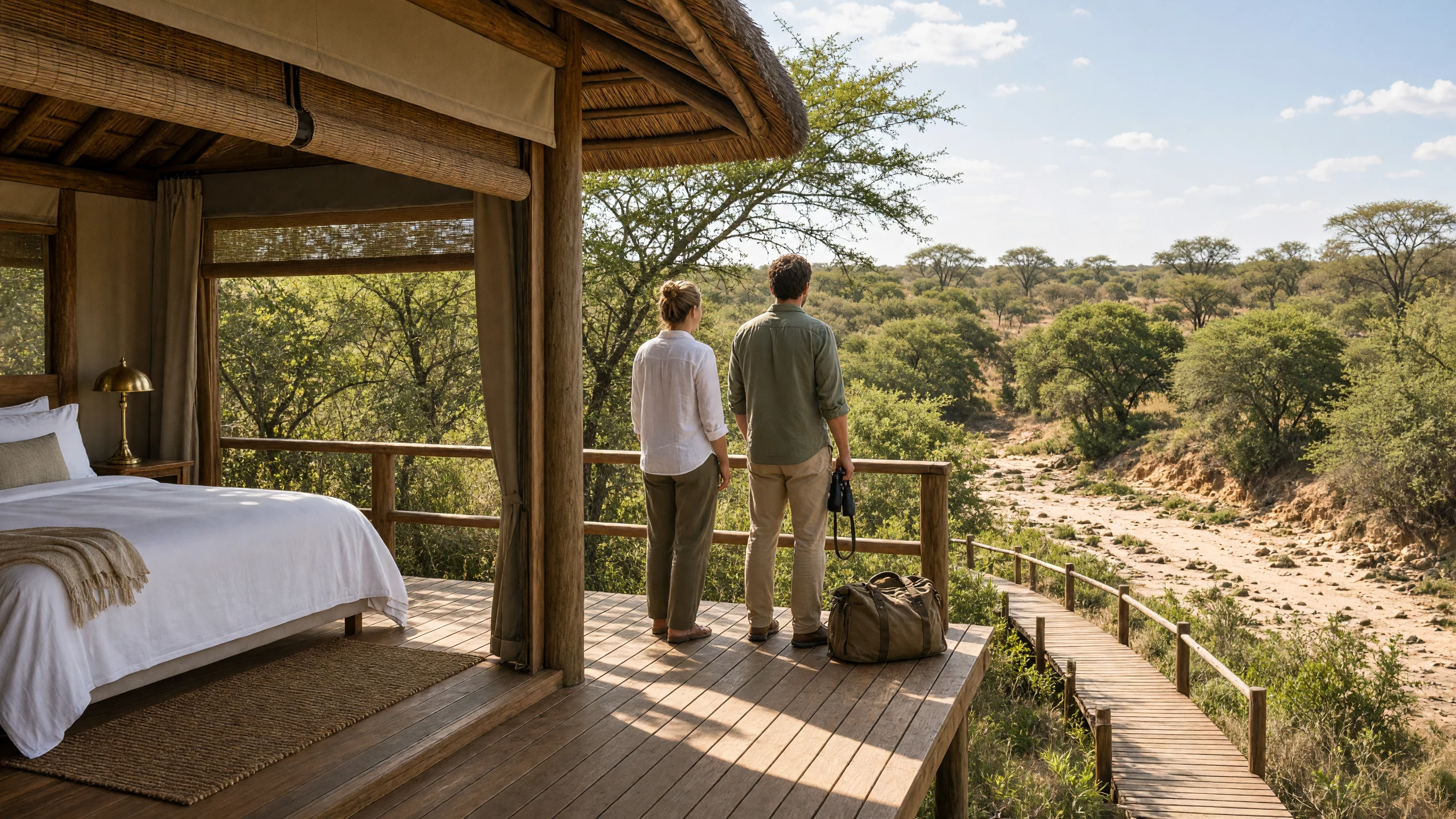
Exploring luxury safaris in South Africa usually begins at a small airstrip outside Hoedspruit, where a nine-seater Cessna waits with the door propped open and a crate of cold water bottles strapped into the back. The flight to a private reserve in the Lowveld takes about twenty-five minutes. Below, the bushveld unrolls in olive and dust, cut by the pale loops of dry riverbeds.
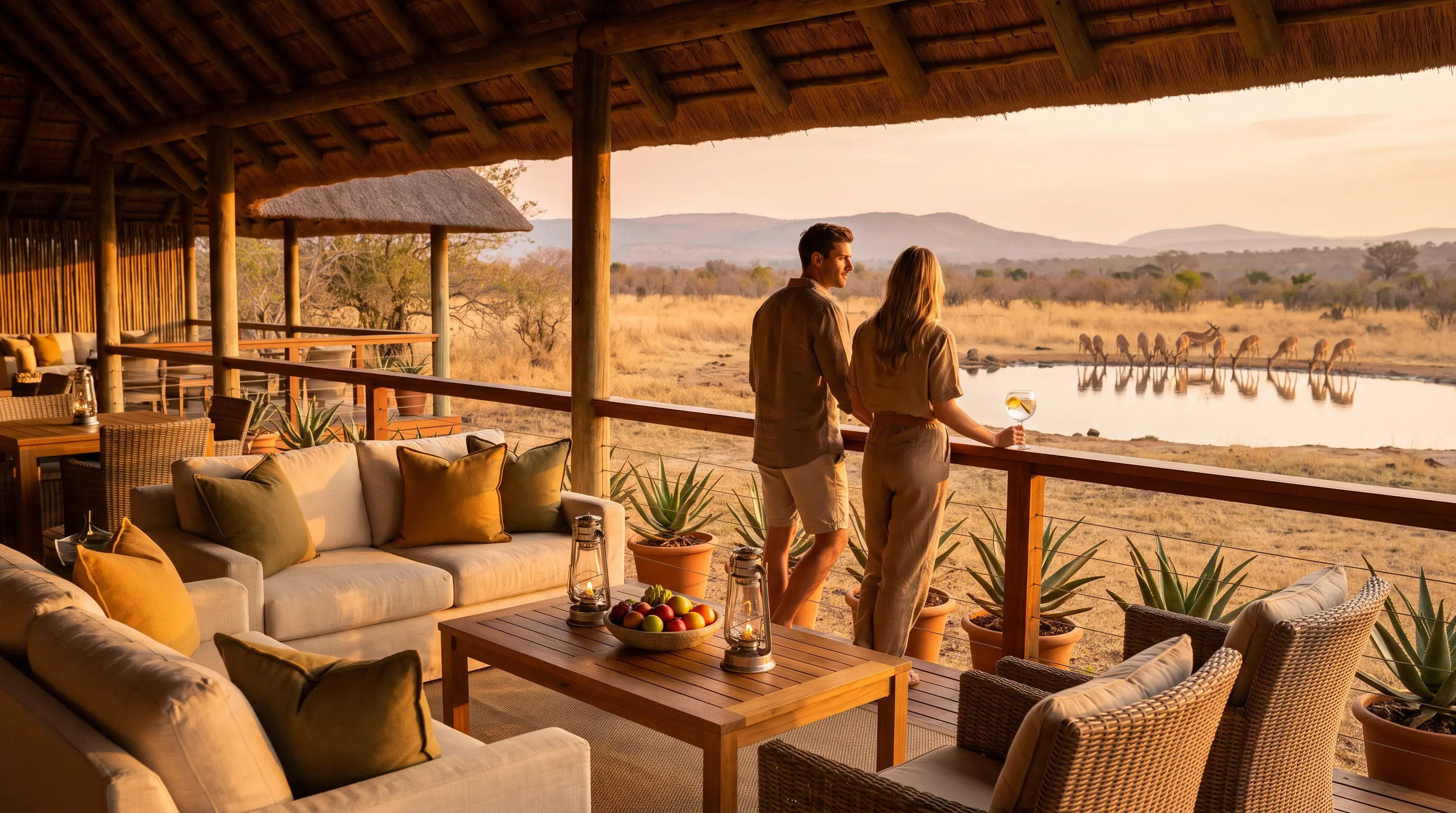
Passengers step out onto a gravel strip and are met by a ranger in khaki. Within an hour of landing they're sitting on a veranda with a glass of iced tea, watching a herd of impala pick its way past the waterhole. That compression of time and distance draws people to this corner of Limpopo and Mpumalanga. The journey from city to wilderness is short, yet the landscape is genuinely remote.
What sets a luxury safari apart
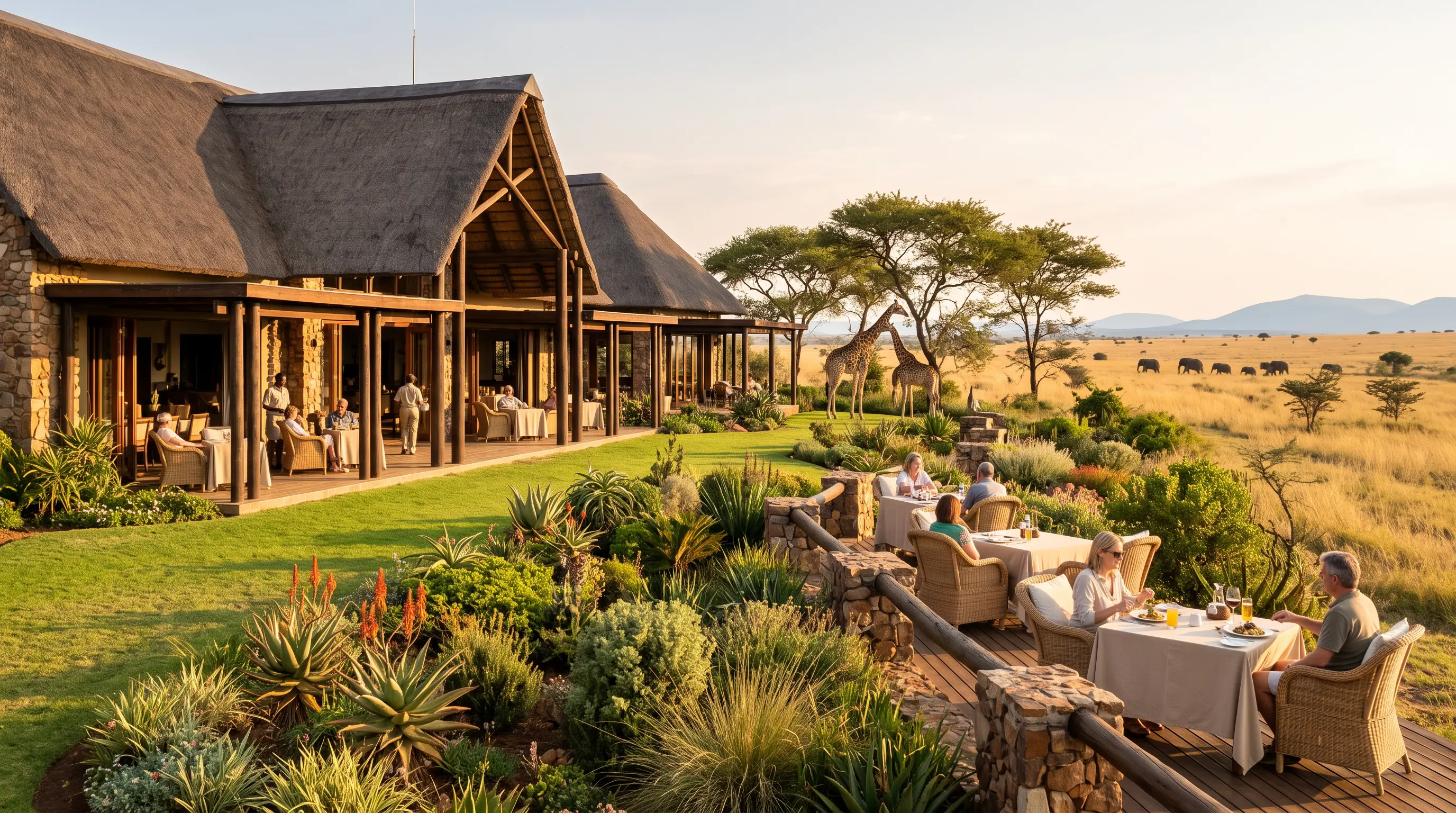
Sabie Sabie, a private concession bordering the Kruger, is one of several reserves where the density of big game is matched by an unusual degree of comfort. Lodges here typically accommodate between eight and twenty guests, which keeps the ratio of staff to visitor high and the pace unhurried. Game drives leave at first light and again in the late afternoon, when the animals become active.
A typical morning drive lasts three to four hours. The vehicle stops often. A ranger might cut the engine to listen for the low grunt of a lion or to point out fresh leopard tracks pressed into the sand. Guests are encouraged to ask questions, and the good guides answer them without condescension.
Back at the lodge, breakfast is served on a shaded deck overlooking a seasonal river. The food is unfussy but excellent: fresh fruit, eggs cooked to order, strong coffee. Afterward there's time to read, swim, or sit and watch the birds. The midday heat encourages stillness.
Tracking, walking and the quieter hours
Walking safaris offer a different register entirely. Setting out on foot with an armed guide and a tracker, guests notice things the vehicle passes at speed: a spider's web jewelled with dew, the sharp scent of wild sage crushed underfoot, the hollow call of a francolin from the scrub. The pace is slow. A two-hour walk might cover less than two kilometres.
The guides who lead these excursions carry a wealth of knowledge about tracks, plants and animal behaviour. One ranger described how a family of elephants will pause at the edge of a clearing to assess the wind before crossing. That habit, he said, is learned over decades. Anecdotes like that stay with you.
The best moments tend to arrive without warning. A leopard draped across a marula branch at dusk. A herd of elephants filing down to a waterhole in near silence.
Evenings follow a comfortable rhythm. Sundowner drinks are poured as the sky turns orange and then deep violet. Conversation drifts between the day's sightings and nothing in particular. Dinner is often served outdoors, under a canopy of stars so dense they seem closer than they should be.
Accommodation ranges from canvas-and-timber suites with private plunge pools to more traditional thatched rondavels with outdoor showers. Many lodges have a small library, a spa treatment room, and a waterhole lit gently at night so guests can watch nocturnal visitors from the bar.
When to go and what to expect
The dry winter months, from June through September, are generally considered the best time for game viewing. Vegetation thins, water sources shrink, and animals congregate around the remaining pools. Daytime temperatures sit around 22 to 25 degrees Celsius, though mornings can be cold enough to need a fleece and a blanket in the open vehicle.
Summer, from November to March, brings rain, lush greenery and an influx of migratory birds. It's a beautiful season for photographers, though the thicker bush makes sightings less predictable. Rates also drop, which can make a high-end lodge more accessible.
Malaria precautions are advisable for the lowveld reserves, and most lodges recommend consulting a travel doctor well before departure. Visas for South Africa are straightforward for most European and North American passport holders, typically granted on arrival or via a simple online application.
Exploring luxury safaris in South Africa: the practicalities
Most itineraries combine two or three reserves to vary the terrain and the wildlife. A stay of three nights per lodge is common. Transfers between reserves are usually by light aircraft, with luggage limited to a soft bag of around 15 kilograms.
Pack light: neutral colours, a wide-brimmed hat, binoculars, and a good camera. Laundry is included at nearly every luxury lodge, which means guests can manage with far less than they'd expect. The lodges themselves tend to be relaxed about dress, though a collared shirt at dinner is never out of place.
The cost of a luxury safari varies widely, but a reasonable guide for a mid-to-high-end lodge is between 800 and 1,500 euros per person per night, inclusive of meals, drinks and two game drives daily. Some reserves charge a conservation levy of around 150 rand per person per night. It's worth checking what's included before booking.
Children are welcome at many lodges, though some reserves impose a minimum age of six or twelve for game drives. Family-friendly properties often offer shorter drives, junior ranger programmes, and babysitting services.
A note on the experience itself
The appeal of exploring luxury safaris in South Africa isn't just about the animals, extraordinary as they are. It's the quality of attention. Days are structured around the rhythms of the bush rather than the clock. Guests sleep when it's dark, wake before sunrise, and eat when they're hungry. Phones lose signal in many of the more remote reserves, and nobody seems to mind.
Conversations with guides and fellow guests tend to turn philosophical. One evening, over a glass of Chenin Blanc, a retired couple from Hamburg described how they'd returned to the same lodge for eleven consecutive years. They'd seen the same lion pride through three generations of cubs. The ranger had become a friend.
That kind of loyalty speaks to something the luxury safari does particularly well. It creates the conditions for stillness, for observation, for the slow accumulation of detail. Guests learn to read the bush a little. They notice when the francolins go quiet. They start to recognise individual animals by the shape of their ears or the pattern of their scars.
It's not a cheap holiday, and it isn't meant to be. The private reserves are expensive to run, and the conservation work they fund is considerable. Anti-poaching teams, habitat management, community outreach: all of it is underwritten in part by the nightly rate. Guests often come away with a deeper understanding of what's at stake.
Beyond the game drive
Many lodges offer add-ons: a hot-air balloon flight over the bushveld at dawn, a visit to a local village, a day trip to the Panorama Route with its waterfalls and Blyde River Canyon. These excursions are worthwhile if there's time, though the core experience remains the twice-daily drives.
Some reserves now offer sleep-outs on elevated platforms, where guests spend a night under a mosquito net with only a canvas screen between them and the sounds of the bush. Hyenas whoop in the distance. A lion calls. Coffee arrives with a guide at first light.
The birding is exceptional, particularly in the summer months. More than 500 species have been recorded in the Kruger region alone, from the tiny woodland kingfisher to the spectacular southern ground hornbill. Guided bird walks can be arranged at most lodges.
Photographers should consider a private vehicle, which many lodges offer at an additional cost. This allows them to linger at a sighting, to wait for the light, to frame a shot without the pressure of other guests. It's a worthwhile investment for anyone serious about wildlife photography.
What to look for when booking
Not all private reserves are equal. Some are fenced, others open to the wider national park. Open boundaries allow animals to move freely, which generally makes for more authentic sightings. It's worth asking about traversing rights, vehicle numbers, and the maximum number of guests per game drive.
Guide quality matters enormously. A good ranger can turn a routine drive into something memorable. Many lodges publish their guides' biographies online, and it's worth reading them. Some have decades of experience, others are younger but passionate and well-trained.
Finally, consider the lodge's sustainability credentials. A growing number of properties publish annual reports on their water usage, waste management, and community investment. Others are less transparent. Asking direct questions before booking is entirely reasonable.
The last morning of a stay often ends with a final drive and a farewell breakfast in the bush: a table set with white linen, fresh pastries, and a flask of coffee. Then it's back to the airstrip, a short flight, and the return to ordinary life. Most guests leave with a camera full of photographs and a notebook full of scribbled observations. Some leave with a return booking already in place.
The winding gravel road back to the airstrip passes a termite mound about the height of a grown man, its surface caked and pale in the morning sun.