

Safaris in Tanzania: A Northern Circuit Journey
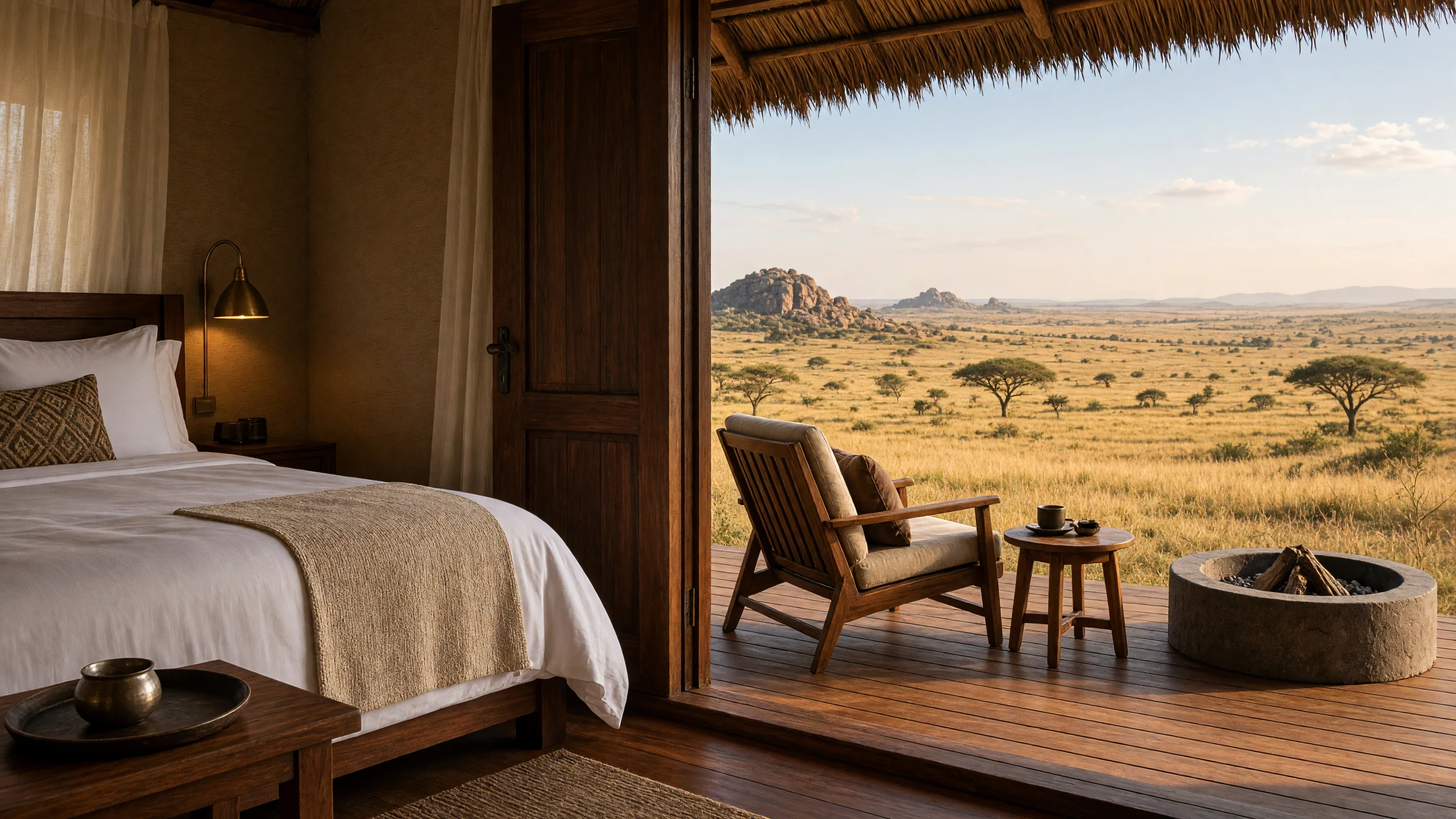
The Land Cruiser's suspension groaned over a rut in the track at 6:47 in the morning, and the guide, a man named Joseph who'd been doing this for nineteen years, cut the engine without being asked. Three lions lay not thirty metres off, their tawny flanks rising and falling in the half-light. Nobody in the vehicle spoke for four minutes. That was the first morning of eleven days spent on safaris in Tanzania, and the pattern established itself immediately: the engine dies, the world rushes in, and you realise how much noise you normally make just by existing.
They'd flown into Kilimanjaro International the previous afternoon, collected by a driver whose name they'd forget and whose careful handling of the potholed road to Arusha they'd remember. The lodge sat on the outskirts, behind a wall topped with broken glass that caught the sunset. Dinner was stewed goat and pilau rice. They slept eleven hours without stirring.
Joseph collected them at five the next morning. The vehicle was a 2007 Toyota Land Cruiser with pop-up roof panels, two spare tyres mounted on the bonnet, and a crack in the windscreen that ran from the passenger corner to roughly the middle, where it stopped. He'd stocked it with boxed water, a thermos of coffee that tasted of tin, and binoculars that weren't quite aligned. They'd work fine, he said. They didn't, not really, but you learned to close one eye and compensate.
The first three days unfolded in Tarangire National Park, where the elephants own the place and everyone else pays rent. Herds of forty, fifty, sixty individuals moved through the acacia woodland with the unhurried confidence of institutions. Joseph identified one old bull by a torn left ear, a notch he'd first noticed in 2011. The bull had been ancient even then. They encountered him twice, both times near the Tarangire River, both times alone, drinking with the slow mechanical motion of a pump. The second sighting, he startled at a bird's cry and trotted ten metres before remembering his dignity. It was the only time they saw an elephant move faster than a walk.
Baobabs punctuated the landscape, their swollen trunks storing water against droughts that arrive every few years with the regularity of administrative deadlines. Joseph claimed the largest one in the park was 1,200 years old, then corrected himself: 1,400, he'd been told by a researcher, though the researcher might have been guessing. The tree's circumference would need four adults linking arms. They didn't try. The ground around it was scattered with dried fruit husks and the droppings of animals that had sought its shade.
The lodge in Tarangire operated on generator power from six to ten in the evening. Hot water came from solar panels that worked adequately unless you'd showered after someone else. The food was plentiful and warm and never quite what you expected: a stew announced as beef turned out to be goat, a vegetable soup contained no vegetables anyone could name. On the second night, a genet cat walked the perimeter wall at eye level to the dining terrace, its tail longer than its body, its movement liquid and unconcerned. A German tourist tried to photograph it with a phone. The genet waited until he was ready, then left.
They drove to Serengeti on the fourth day, a transit of six hours that Joseph broke with stops at a Maasai village and a petrol station where the toilet required a key attached to a piece of wood the size of a cricket bat. The village visit felt arranged, which it was, though the children who crowded around the vehicle weren't performing. They wanted pens, specifically, and were disappointed by the cheap biros on offer. One boy examined his with visible disgust before pocketing it. The pens had cost roughly a pound for twenty at Arusha airport. They'd bought three packs and ran out by the third stop.
The Serengeti proper began at Naabi Hill Gate, where the road surface ended and the park fees were collected. The figure came to something over eight hundred dollars for three people for four days, paid in advance through the tour operator, though Joseph still carried the receipts in a metal box that clanked when he braked. The descent from the gate into the plains revealed what they'd come for: grass to every horizon, broken only by kopjes, those granite outcrops where lions lounge and lizards bake and the wind carries the smell of dust and something else, something green and temporary that you can't quite identify.
The migration was passing through, though 'passing' implies more direction than the herds actually possess. Two million wildebeest, Joseph said, plus zebra and gazelle in proportions that shifted daily. They found the main concentration on the second Serengeti morning, a mass of animals that stretched beyond binocular range, moving as a single organism with no brain and no purpose beyond the next mouthful of grass. The sound reached them first, a low continuous rumour of hooves and breathing and the occasional bark of contact calls. Then the smell, which wasn't unpleasant, just dense, mammalian, ancient. They watched for two hours from a kopje's shade as the front of the herd drifted east and the rear caught up and the middle compressed, individual animals visible only at the edges where stragglers paused to drink from a depression that would be dust in three weeks.
A cheetah killed a gazelle fawn perhaps four hundred metres from their position. Joseph spotted it before they did, his hand raised in the gesture that meant stop, look, don't speak. The chase lasted seven seconds by the vehicle's clock. The cheetah's acceleration seemed to violate something, to break a rule about how quickly living things can rearrange themselves. She strangled the fawn for four minutes, then looked up directly at their vehicle with an expression that wasn't fear and wasn't challenge, just assessment, the calculation of whether this thing would take what she'd earned. It didn't. She dragged the carcass to a termite mound and began eating, and they left her to it because Joseph said she'd be nervous for an hour and there was no virtue in waiting.
The Serengeti lodge sat on a ridge with views that the architect had clearly understood. Rooms were tents, technically, though tents with wooden floors and proper beds and bathrooms where the water ran hot if you asked at reception an hour in advance. On the third evening, they drank gin and tonics on the terrace while a herd of buffalo moved across the middle distance, maybe two hundred animals, their progress marked by dust and the occasional glint of horn in the lowering sun. A staff member brought mosquito coils and lit them with the efficiency of long practice. They didn't see a mosquito all evening, though the coils burned for six hours.
What to Expect from Safaris in Tanzania: The Northern Circuit
Ngorongoro Crater came last, the descent on the fifth morning through cloud that parted at the rim like a curtain on a stage they hadn't paid to see. The crater floor lay two thousand feet below, a contained ecosystem of twenty thousand large animals in a space you could cross in three hours. They saw two black rhinoceros, both distant, both apparently stationary until Joseph's binoculars revealed the slow motion of grazing. There are perhaps thirty in the crater, he said, though he might have meant fifty, and the number changes with births and poaching and the simple failure of animals to appear when you want them. They counted themselves fortunate. Many visitors see none.
The crater's lions are famously fat, and these were, a pride of eleven sleeping off a buffalo kill near a marsh where hippos wallowed with the indifference of the very large. One lioness raised her head at their approach, assessed the vehicle, returned to her dreams. The buffalo's ribcage stood white against the green, already stripped by vultures and whatever comes after vultures in the sequence of consumption. Joseph said the kill was two days old, maybe three. The smell reached them in intermittent waves, carried by breezes that shifted without pattern.
Lunch happened at a designated picnic site near a hippo pool, boxed meals of cold chicken and hard-boiled egg and a tomato that had travelled further than they had and tasted of nothing in particular. Yellow-billed kites circled overhead, trained by decades of tourists to expect scraps. One swooped low enough to snatch a piece of bread from a woman's hand, not aggressively, just efficiently, the way you might take something you'd left on a counter. The woman laughed. She'd been warned, Joseph said, though not by him, and the bread wasn't important.
They climbed from the crater in the afternoon, the Land Cruiser's engine labouring in low gear, the cloud they'd descended through now burning off to reveal the rim's full scale. Joseph stopped at a viewpoint where a wooden sign identified the crater's dimensions in feet and metres and square kilometres, information that seemed simultaneously precise and useless. They photographed each other against the view, the standard transaction, and drove on to the lodge that would be their last.
This lodge was the most comfortable, which meant they noticed it least. Hot water unlimited, electricity all hours, a menu with choices. They ate dinner with a couple from Brisbane who'd been on a different circuit, Zanzibar first then the mainland, and who spoke of beaches with the nostalgia of people already sunburned and ready to leave. The conversation turned to cost, as it does, and they compared figures without complete honesty, everyone suspecting they'd paid too much or too little or simply the wrong amount for what they'd received. The Australians had seen a leopard in a tree, a sighting that hadn't happened for them despite eleven days of looking. You don't get everything. You don't even get most things, if most things is the full list of what might theoretically occur.
The flight home left Kilimanjaro at 11:30, arriving in Nairobi for a connection that gave them four hours in a terminal where the coffee cost six dollars and the seats were designed to prevent sleep. They'd expected this. They'd expected, too, the gradual reassertion of ordinary concerns: emails, weather at home, whether the milk they'd left would last until return. What they hadn't expected was the persistence of the other rhythm, the one established in Joseph's silences, in the waiting without purpose that the animals made natural. For two weeks after, one of them would wake at 5:30 without alarm, lie in darkness listening for sounds that weren't there, fail to fall back asleep.
The photographs numbered 847, though they'd delete perhaps a third for blur or repetition or the discovery that what they'd thought was a lion was actually a termite mound with shadows. The good ones they'd show selectively, aware that no image conveys the scale, the smell, the particular quality of light at 6:15 when the sun clears the horizon and the grass seems to ignite from within. They'd mention the cheetah kill, the rhino that might have been thirty or fifty, the genet cat on the wall. They'd forget the broken binoculars, the toilet key, the goat stew mistaken for beef. These details would persist without being summoned, surfacing at odd moments: the crack in the windscreen, the way Joseph's coffee tasted of tin, the exact colour of dust on the Serengeti track when the wind dropped and the vehicle's passage hung in the air behind them.
They haven't returned. They might, or they might not. The possibility exists in the way that possibilities do, neither pressing nor remote, just present, like the memory of that first morning when the engine died and the lions breathed and nobody spoke because there was nothing to say that wouldn't diminish what was simply there, simply happening, simply continuing in their absence now as it had before their arrival and would after their departure, which is the truth about safaris in Tanzania that no brochure quite captures and no photograph preserves, though people keep trying, as they should, as they will, as they did on that morning and on others, with cameras and phones and the inadequate recording devices of memory, which is perhaps the most faithful and the most treacherous medium of all, preserving everything and nothing in proportions that shift without warning, so that a cheetah's acceleration might blur while the taste of tin coffee sharpens with the years, or the reverse, or neither, or both at different times, which is not a mystery but a fact, a plain observable particular, like the crack in the windscreen that stopped in the middle, as if the glass had decided enough was enough, or as if something had interrupted its progress, a change in temperature, a bump in the road, the simple accumulated decision of matter to be the way it is rather than the way it might have been.
Their departure from Kilimanjaro was delayed forty minutes by a baggage conveyor malfunction. They sat in the departure lounge and watched a man in a yellow vest attempt repairs with tools from a metal case. He succeeded eventually, or someone did, and the flight boarded, and the delay made no difference to any connection because the Nairobi flight was late too, though for different reasons they never learned. This is how travel concludes, not with the animals or the landscapes but with the ordinary machinery of movement, the belts and engines and human interventions that make displacement possible and also make it slightly less than smooth, slightly less than planned, slightly more like the rest of life than the exceptional moments would suggest if you let them dominate the account, which you shouldn't, though everyone does, because the exceptional moments are why you went and what you remember and what you attempt, inadequately, to convey, while the delays and the conveyor belts and the six-dollar coffee recede into the category of context, necessary but not sufficient, present but not defining, the frame rather than the picture, though frames matter too, in their way, in their place, which is not the centre.
Joseph sent a message three weeks later, a group text to all his clients that season, announcing the birth of his third child, a daughter named Happiness. They replied with congratulations and a photograph they'd taken of him at the vehicle, though in the photograph he wasn't looking at the camera, was instead pointing toward something off-frame, his mouth open mid-sentence, his left hand raised in that gesture that meant stop, look, don't speak. They never learned what he'd seen. The image captured only the instruction, not its object, which was appropriate, which was maybe the point, which was certainly the pattern of those eleven days, the accumulation of moments that directed attention outward toward something that wouldn't wait and couldn't be recalled with complete accuracy, only suggested, only approached, only gestured toward with the inadequate tools of language and image and the slowly shifting memories of three people who'd been there together and remembered differently, as people do, as they must, as the lions breathed and the cheetah killed and the genet cat waited, patient, on the wall, for something it didn't need to name.
The daughter's name was actually Happiness, or possibly Happy, the text wasn't clear and they didn't ask, though they kept the message, though they don't know why, though the reason doesn't matter, though reasons rarely do when you're trying to hold onto something that happened in a place you won't return to with people you won't see again, which is the condition of most travel, most experience, most of the accumulated weight of being present in places that continue without you, that barely noticed your presence, that will receive the next vehicle, the next set of faces pressed to pop-up roof panels, the next inadequate binoculars and tin coffee and cracked windscreens that stop in the middle as if exhausted, as if the journey itself had been enough, as if arrival were always provisional and departure always imminent and the time between always shorter than you'd planned, always more compressed, always leaving you with the sense that you'd missed something crucial while looking at something else, which is perhaps the only honest way to travel, the only way that doesn't pretend completeness, the only way that acknowledges the fundamental condition of being somewhere briefly, partially, with attention that wanders and returns and wanders again, never quite settling, never quite grasping, always approaching and withdrawing in the rhythm that Joseph understood and they were only beginning to learn, that first morning, that last evening, that ordinary afternoon in Ngorongoro when nothing much happened and they ate cold chicken near the hippos and a kite took bread from a woman's hand and she laughed, surprised, delighted, already beginning to tell the story, already shaping it into something that could be shared, something that would lose the smell and the heat and the particular angle of light but gain the structure of narrative, the comfort of event, the modest pleasure of having been there, of being able to say, when asked, yes, we went, we saw, it was like this, it was like that, it was, it was, it was.
The second spare tyre on Joseph's Land Cruiser was flat. They discovered this on the morning of the sixth day, when he checked pressure at a petrol station that charged extra for air, though only fifty cents, which he paid without comment and without attempting to inflate the tyre, which needed replacement, not air, a fact he accepted with the equanimity of someone who'd dealt with worse and would again. They completed the remaining five days on one spare, driving more carefully, avoiding rocks that they'd have ignored before, the crack in the windscreen suddenly seeming more significant than it had. Nothing happened. The tyre wasn't needed. The vehicle returned to Arusha with the flat spare still mounted, still flat, still waiting for attention that would come in the off-season, when the vehicles were serviced and guides rested and the grass grew long in places where they'd driven, erasing the tracks, removing the evidence, preparing for the next arrivals who would make their own paths, their own mistakes, their own collections of particular details that would blur and sharpen and blur again in the years of recollection that followed, the years in which they'd sometimes remember the flat tyre more clearly than the lions, the fifty cents more vividly than the cheetah's impossible acceleration, the ordinary mechanics of travel more persistently than the exceptional moments that had justified the journey, which was perhaps the final lesson, though lesson implies more intention than the experience actually carried, more structure, more meaning, when really it was just what happened, what they saw, what they carried back without choosing, without filtering, without the possibility of revision that memory falsely promises and never delivers, the flat tyre and the cheetah and the tin coffee and the daughter named Happiness or Happy, all of it, all of it there, all of it present, all of it waiting to surface at odd moments, in airport lounges, in conversations that turned to travel, in the early mornings when they woke at 5:30 and listened to sounds that weren't there and couldn't fall back asleep and didn't entirely want to, the rhythm still present, still insistent, still theirs for those brief hours before the ordinary day resumed and the lions receded and the grass grew in places they'd never see again, growing, always growing, without them, because of them, in spite of them, the way things do, the way things will, the way they did on that morning and every morning since, the green temporary smell that you couldn't quite identify, that nobody could, that perhaps didn't exist as a single thing but was rather the accumulation of many things, grass and dust and animal and distance and heat and the particular quality of light at 6:15, all of it together, all of it separate, all of it present in the moment before language names it and naming diminishes it, the moment that Joseph knew how to find and they were learning, slowly, imperfectly, with the wrong binoculars and the flat spare and the crack that stopped in the middle, enough, enough, the glass deciding, the journey continuing, the animals breathing, the world rushing in when the engine died, as it did, as it does, as it will for whoever comes next, whoever points, whoever waits, whoever learns finally to stop, to look, to not speak.
Their housekey had bent slightly in the lock while they were away, though they didn't discover this until their return, until the ordinary mechanisms of home reasserted themselves, until the journey completed itself not with arrival but with the gradual dissolution of journey into dailiness, into the routines that travel interrupts and then restores, changed slightly, marked in ways that aren't visible, that don't announce themselves, that surface only in the bent key, the early waking, the occasional pause in conversation when someone mentions Tanzania and they don't respond immediately, having travelled elsewhere in that moment, having returned to a vehicle with a cracked windscreen and a guide who pointed and didn't speak and expected the same of them, which they gave, which they learned, which they carried back without knowing they'd learned it, without choosing to, without the possibility of refusal that experience sometimes offers and sometimes doesn't, the flat tyre still mounted, still waiting, still a detail that doesn't fit the narrative of wonder and wildness that the word safari conjures and that the experience partly delivered and partly withheld, the gap between expectation and event being itself the event, the thing carried back, the bent key, the early morning, the silence when Tanzania is mentioned and they are elsewhere, present but not present, there but not there, the way the lions were there, the way the grass grows, the way the world continues with and without your attention, which is the final particular, the last detail, the thing to end on, though nothing ends, though everything continues, though the daughter grows and the vehicles are serviced and the guides rest and the next arrivals come with their own cracked windscreens and their own inadequate binoculars and their own willingness to be directed, to stop, to look, to not speak, to wait in silence for whatever the morning offers, whatever the track reveals, whatever the particular moment of being present in a place that doesn't need you, that barely notices you, that will continue, that does continue, that continued that morning when they left, the grass already growing over their tracks, the wind already erasing their passage, the ordinary machinery of the world resuming its operation without pause, without comment, without the need for conclusion that human narrative imposes and that the world ignores, continues, outlasts, survives, the way things do, the way things have always done, the way they will do when this account is finished and the reader has moved on and the words have done what words can do and failed at what they cannot, which is everything that matters, everything that persists, everything that remains when the engine dies and the world rushes in and nobody speaks because there is nothing to say that wouldn't diminish what is simply there, simply happening, simply continuing, as it did, as it does, as the bent key still opens the door, still functions, still bears the mark of absence without announcing it, without needing to, the mark present but not defining, the frame rather than the picture, though frames matter too, in their way, in their place, which is not the centre, which is never the centre, which is always the edge, the boundary, the point where one thing becomes another, where travel becomes memory, where memory becomes story, where story becomes words, where words become this, this sentence, this ending, this concrete low-significance detail: the spare tyre was replaced in November, they learned later, a month after their departure, by a mechanic in Arusha whose name they never knew.