

Where to See the Great Migration on Safari
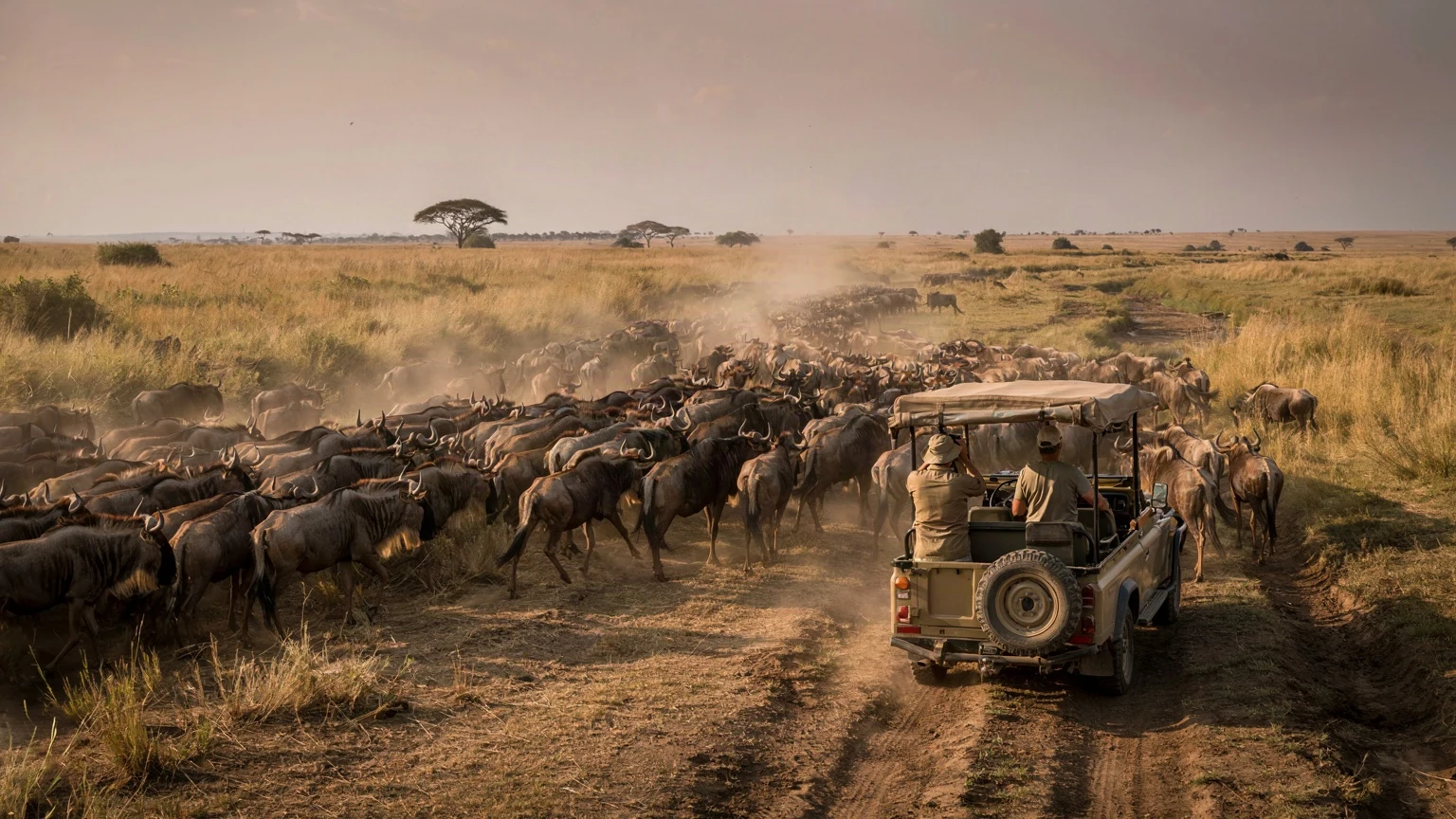
Each year around 1.3 million wildebeest move through the Serengeti and Masai Mara in a loop that has no fixed start and no advertised finish. The question of where to see the Great Migration on safari comes down to one thing above all: which month you travel. Pick the wrong one and you'll be standing in long grass, scanning empty plains, while the herds are 200 kilometres north and moving.
What follows is the seasonal geography of the herds, the crossings that draw the crowds, and the camps that put you within reach of both without spending your mornings in transit.
The shape of the year
The migration isn't a single event but a circuit driven by rain and grass. Between January and March the wildebeest and zebra spread across the short-grass plains of the southern Serengeti and the Ngorongoro Conservation Area, calving in a window that peaks in February. Around half a million calves are born in a matter of weeks. Predator activity is high, the grass is green, and the light after rain is clean and low.
By late April the herds are drifting west and north. May is a transitional month: the southern plains empty, the western corridor fills, and the rivers begin to run. If you want the spectacle without the crowds, this is often the quietest window that still delivers animals in number.
June and July bring the Grumeti and Mara river systems into play. The herds mass on the southern banks of the Mara River from roughly late July, and the crossings, when they come, run through August and into early September. There's no schedule. A herd can gather at a crossing point for three hours and then turn away, or cross in eleven minutes while your vehicle is still climbing the far bank.
From September the herds are in the Masai Mara proper, spread across the Musiara and Mara Triangle sectors. October sees them drifting back south. November rains pull them down through the eastern Serengeti, and the loop closes.
Where to see the Great Migration on safari: the two main theatres
The Serengeti is vast, around 14,750 square kilometres, and the migration uses most of it across the year. That scale matters. A camp in the wrong corner of the park is a two-hour drive from where the herds actually are, and in the wet season that drive can take twice as long.
The Masai Mara is smaller and denser. At roughly 1,500 square kilometres it holds a fraction of the Serengeti's land but concentrates the herds in the north-west between July and October. The Mara Triangle, managed separately from the rest of the reserve, has fewer vehicles per sighting and a stricter ranger presence. If river crossings are the priority, the Triangle's western bank gives you the cleanest approach.
Crossings, and how to think about them
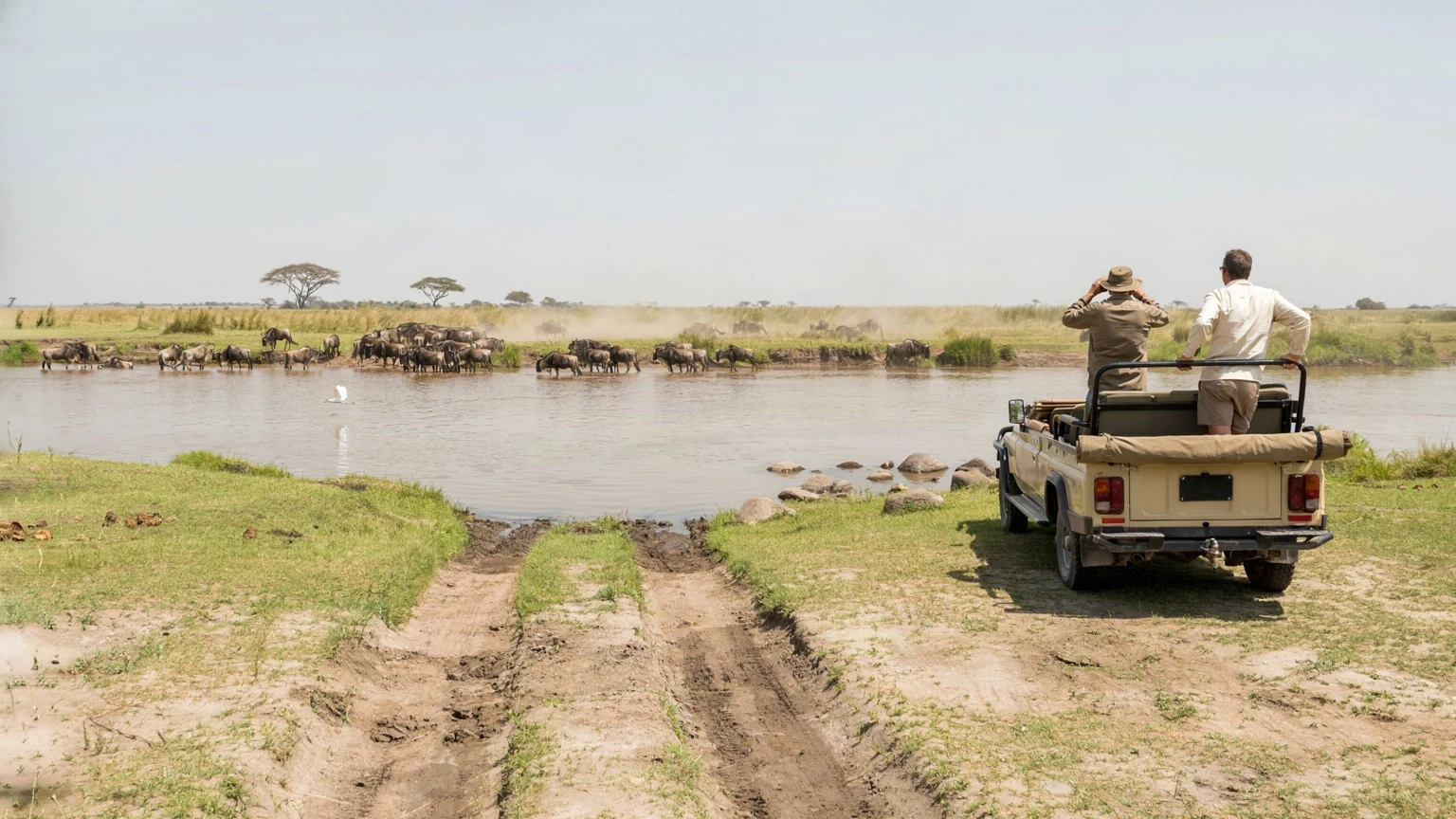
River crossings are the headline act, and they're also the least predictable part of any itinerary. The Mara River runs through both ecosystems, and the herds cross at dozens of points, some well known and some only found by following the noise.
In the Masai Mara, the main crossing points sit near the Serena and Mara Bridge areas, with others along the northern bank. In the Serengeti, the action shifts between the Grumeti River in June and July and the Mara River in the far north from August. A good guide reads the herd's behaviour, not a timetable: animals bunching at the bank, dust rising, vultures gathering on the far side.
Book at least three nights at any crossing camp. Two nights gives you four game drives and a reasonable chance. One night offers very little margin for error.
Seasonal camps that follow the herds
Several operators run mobile camps that dismantle and relocate two or three times a year to stay close to the migration. These are lightweight setups: canvas tents with proper beds, bucket showers, and a mess tent where dinner is served at a long table. The advantage isn't luxury; it's distance. A mobile camp in the northern Serengeti in August puts you twenty minutes from the river instead of ninety.
For a more settled base, the permanent lodges in the central Serengeti work well for the calving season and the November return, when the herds pass through the Seronera valley. The trade-off is that you'll share the roads with more vehicles. That's a fair exchange in February, when the plains are wide enough to absorb them.
In the Mara, the conservancies bordering the reserve offer a quieter experience with night drives and walking permitted, which the reserve itself doesn't allow. You'll pay a conservancy fee on top of your park fees. Worth it if you value the absence of other vehicles at a crossing.
What the herds look like when they arrive
Columns of wildebeest moving across a ridge, twenty or thirty abreast, is the image most people carry home. The sound is what stays with you: a constant low grunt, thousands of animals calling at once, audible from a kilometre away on a still morning.
The dust is the other thing. In August the northern Serengeti turns hazy with it by mid-morning, and the light goes flat and yellow. Photographers often prefer the afternoon, when the herds settle and the dust drops.
Planning around the rain
The short rains fall in November and December, the long rains from March to May. Neither is a washout. The long rains arrive as afternoon downpours that clear within an hour, and the green season brings lower rates, fewer vehicles and excellent birdlife. If you're flexible on dates and want the calving without peak-season pricing, late January is a sensible pick.
Track conditions matter more than rainfall totals. Black cotton soil in the western corridor turns slick after heavy rain, and some tracks close for days. Ask your operator which roads their camp uses in the shoulder months.
How long to go
Seven nights is the sweet spot for a migration-focused trip. That gives you time in two locations, typically the central Serengeti and a northern mobile camp, or the Mara and a conservancy. Ten nights lets you add the Ngorongoro Crater or the Grumeti Reserve without feeling rushed.
Shorter trips work if you're pinned to a single season. Three nights in the Mara Triangle in August will deliver. Three nights in the Serengeti in April may not, depending on where you're based.
Vehicles, guides and the practicalities
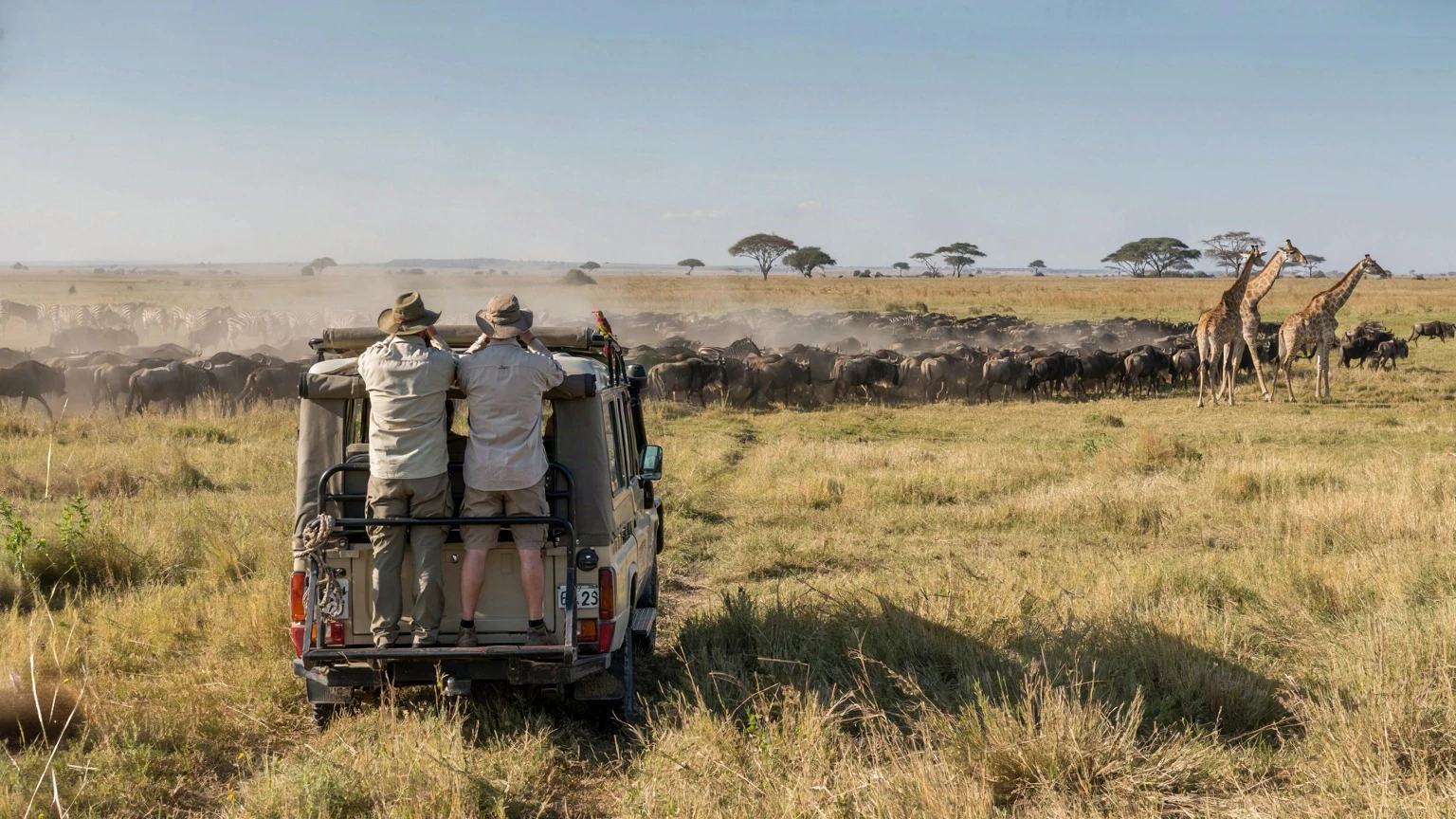
Most camps use open-sided Land Cruisers seating six, with a raised roof for photography. Private vehicles are available at a supplement and are worth considering if you're travelling with young children or want to stay with a crossing for four hours without negotiating.
Guide quality varies enormously. A guide who has worked the same river for a decade will know which crossing points the herds favour after rain and which are dead ends. Ask your operator how long their guides have worked the specific area, not just the country.
Park fees for the Serengeti run around $70 to $80 per person per day in peak season, with concession fees on top. The Mara reserve charges around $100 per person per day, plus a conservancy fee if you're staying outside the reserve boundary. These are usually bundled into your camp rate, but check.
Combining the two
A cross-border trip from the Serengeti into the Mara is possible and increasingly popular. The drive takes around four hours from the northern Serengeti to the Mara, depending on the crossing point and the state of the tracks. You'll need to arrange your visa in advance: Kenya's eTA and Tanzania's visa are separate, and the border post at Isibania is small and unhurried.
Most operators run this route between July and October, when the herds are in the north and the logistics make sense. Outside that window, flying between the two is simpler.
What to expect from a crossing camp
Nights in the northern Serengeti in August are cold. Temperatures drop to around 12°C after dark, and the tents aren't heated. Pack a fleece and a hat. Mornings are misty until the sun clears the ridge, usually by seven.
The camps themselves are comfortable without being grand. Hot water bottles in the bed, coffee brought to your tent at five, and a fire in the mess tent by six. It's a rhythm that suits the animals: early drives, a long midday rest, and an afternoon out that often runs until dark.
Don't expect to see a crossing on demand. Some guests spend four days at a river camp and see one. Others see three in a morning. Arrival times vary, and so should your expectations.
Choosing your month
- January to March: southern Serengeti and Ngorongoro, calving season, green plains, low rates in late January.
- April to May: western corridor, quieter roads, unpredictable weather.
- June to July: Grumeti River crossings, herds moving north.
- August to early September: Mara River crossings, northern Serengeti and Masai Mara, peak season.
- October: herds in the Mara Triangle, moving south.
- November to December: eastern Serengeti, short rains, excellent light and few vehicles.
Peak season runs from July to October, and camps in the north book out a year ahead. If you want August in the Mara Triangle, start planning eighteen months out. If you're flexible, September offers the same animals with slightly softer rates and fewer vehicles at the river.
The distance from your tent to the riverbank at dawn decides your day, whether it's twenty minutes or ninety.