

Why Choose Kenya for a Safari Honeymoon | Expert Guide
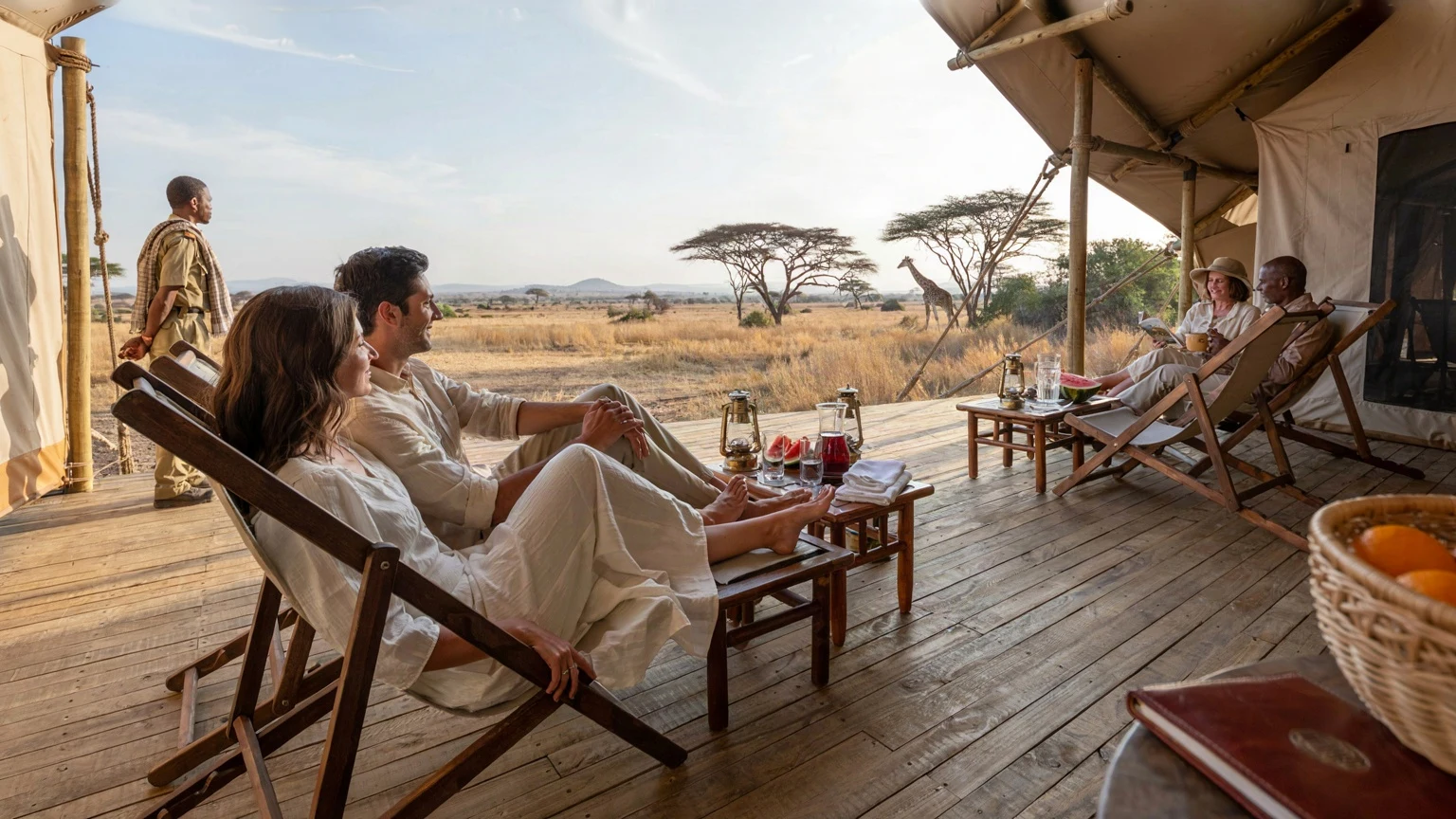
Kenya holds more than thirty national parks and reserves, and a honeymoon pair can move between three of them in under two weeks without ever boarding a long-haul flight. That compactness is the practical argument for the country: the Masai Mara in the west, Amboseli against the Tanzanian border, and the Laikipia plateau to the north all sit within reach of a light aircraft hop. Nobody spends their first morning as a married couple staring at a departure board in Nairobi.
The question of why choose Kenya for a Safari Honeymoon tends to answer itself once the logistics are laid out. A fortnight gives you big cats on open grass, elephants beneath Kilimanjaro, and a stretch of Indian Ocean coast where the water sits at twenty-six degrees in February. Few destinations offer that range of habitats in a single itinerary, and fewer still let you cover it with hand luggage.
Why Kenya for a Safari Honeymoon: The Case for One Country
What surprises people is the scale of the contrast inside one border. The Mara is 1,510 square kilometres of rolling grassland and riverine forest, dense with wildebeest from July through October. Amboseli, some 390 kilometres to the southeast, is dry lakebed and dusty plain with the mountain hanging over it. Laikipia is higher, cooler, and largely given over to private conservancies where you can walk and track on foot rather than watch from a vehicle.
Four hours of flying connects the lot. Camps handle the transfers as part of the booking, so there's no car hire to negotiate and no road map to argue over. You'll spend the honeymoon looking out of a window at the Rift Valley instead.
The Masai Mara in Season and Out
Peak migration months draw the crowds, and the river crossings are genuinely worth the fuss when a herd decides to commit. But the Mara in June, before the wildebeest arrive, gives you the same resident lion prides with perhaps a third of the vehicles at a sighting. Rates drop accordingly. Grass is shorter in the dry months of January and February, which makes spotting easier, and the acacia woodland fills with newborn antelope.
Most honeymoon couples book a private conservancy bordering the reserve rather than the reserve itself. Conservancy land allows walking safaris, night drives, and off-road tracking that the national reserve prohibits, and the fees go directly to local landowners. A guide can take two people out on foot at six in the morning and find a fresh leopard kill before anyone else is awake.
Amboseli and the Mountain
Kilimanjaro sits about forty kilometres inside Tanzania, and Amboseli is the place from which it is most often photographed. The mountain shows itself at dawn and hides behind cloud by mid-morning for much of the year. The elephants here are the draw regardless: large-tusked family groups that have been studied continuously since 1972, accustomed to vehicles and calm in their presence.
Lodges in the park are few, and the western camps look straight at the mountain across a swamp fed by underground streams from the mountain itself. Water in dry country, arranged on that scale, is worth two nights of anyone's time. Two nights here is enough for most couples, three if photography matters.
Laikipia: The Quieter Half
North of Mount Kenya, the Laikipia plateau runs at around 1,800 metres and holds the highest black rhino population in East Africa outside a national park. The conservancies here are vast: 40,000 acres or more on some properties, run for conservation and low-density tourism rather than volume. You might see four other guests all day.
This is where a honeymoon shifts tone. Camel rides at dusk, a private dinner set under a fig tree, a night in a star bed with nothing overhead but the Milky Way. The altitude takes the edge off the heat, and the mornings are cold enough for a fleece.
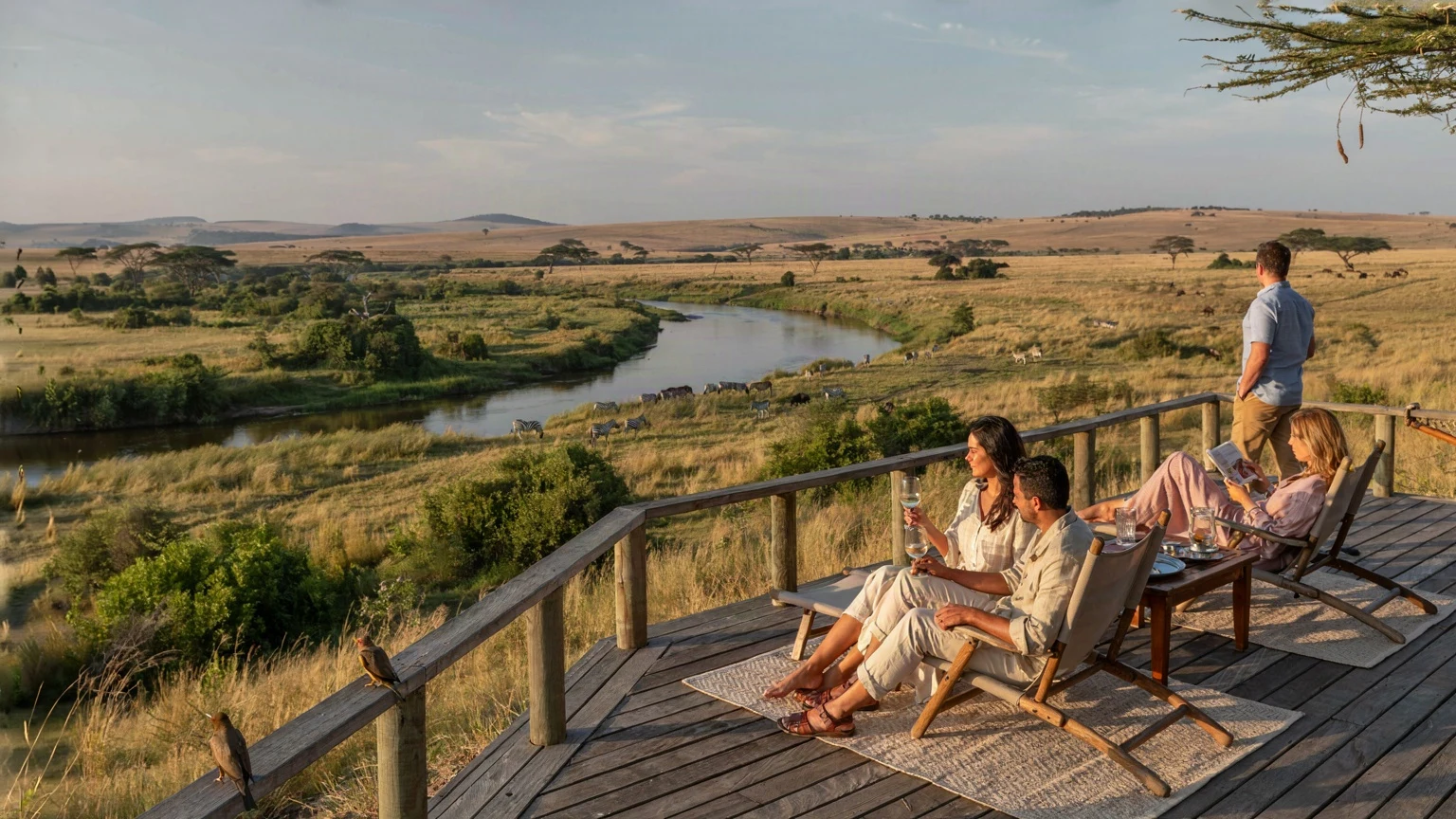
The Coast: Barefoot After the Bush
A flight from Nanyuki to Malindi takes about an hour and a half, and the transition is abrupt in the best way. The Lamu archipelago, Diani Beach, and the Watamu marine park all offer calm water, white sand, and a slower rhythm. Villas and boutique hotels on the south coast run from intimate four-room houses to full private estates with staff.
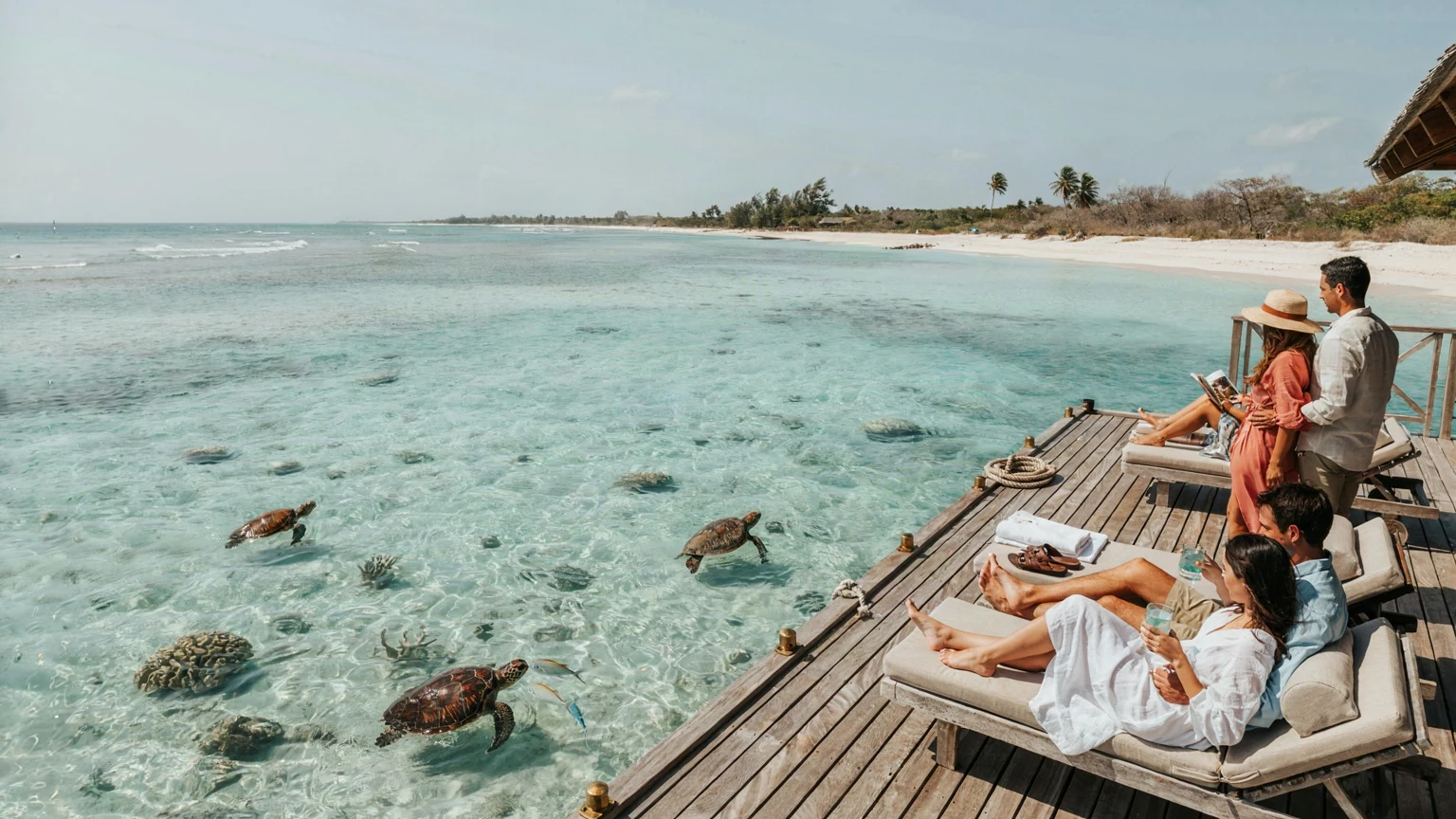
Diving at Watamu is exceptional between October and March, when visibility reaches thirty metres on a good day. The reefs are protected, the turtles are resident, and the dhow trips run at sunset with a cooler of cold beer.
When to Go
- July to October: the migration in the Mara, dry and clear, highest rates.
- January to February: short dry season, good visibility, fewer visitors.
- March to May: long rains, lush scenery, significant discounts, some camps close.
- November: short rains, brief afternoon showers, excellent value.
For a honeymoon, the shoulder months often make more sense than the peak. Late January delivers the same wildlife density as August at a fraction of the cost, and the camps are quieter.
How to Structure a Honeymoon Itinerary
A typical fourteen-night honeymoon splits into three parts. Four nights in the Mara, three in Laikipia or Amboseli, and five on the coast, with a night in Nairobi at either end to buffer the international flights. Nine nights in the bush alone is a lot; most couples find the coast a welcome decompression.
Ten nights works too: four in the Mara, three in Laikipia, three at the coast. Anything less starts to feel rushed given the flying time between camps. Add a night in Nairobi at the start if your international flight lands after four in the afternoon, because the light aircraft to the Mara leave from Wilson Airport early and a missed connection costs a full day.
What to Expect from the Camps
The best Kenyan safari camps are small by design. Six to twelve tents is typical in the conservancies, with a private guide and vehicle assigned to each booking. That means the day is yours: an early drive, back for breakfast, a rest through the heat, a late afternoon outing with sundowners. Guides in the top camps carry decades of experience and know the individual animals in their territory by name and habit.
Honeymoon-specific touches are common and usually handled without fuss: a private dinner on a deck, a bathtub set up outdoors, a hot-air balloon flight over the Mara at dawn. The balloon is worth doing once. It isn't cheap and lasts an hour, and the champagne breakfast on landing is a slightly odd ritual at seven in the morning, but the view from 300 metres over a herd of elephants stays with you.
Tents in the better camps come with proper beds, hot water on demand, and a veranda facing whatever the camp has decided is the view. Ask what the tent overlooks before you book, since a few sit behind the kitchen block and hear the generator until ten at night.
Conservation and Community
Kenya's conservancy model is one of the more successful in Africa. Land leased from Maasai families and used for wildlife tourism pays better than cattle in dry years, and the leases fund schools, clinics, and water projects. Choosing a conservancy camp is a direct contribution to that system. The Mara conservancies alone employ several thousand people and pay out millions of shillings annually in land fees.
Practical Notes
Visas are obtained online in advance through the official portal and cost around fifty dollars. Yellow fever certificates are required if arriving from certain countries, and malaria prophylaxis is sensible for the coast and the lower parks. Luggage on light aircraft is capped at fifteen kilograms per person in a soft bag; the rest can be stored in Nairobi.
The shilling goes a long way on tips and drinks, and most camps accept cards but cash is easier for guides and staff. Tipping isn't obligatory but is customary: ten to fifteen dollars per guest per day for the guide and a similar amount into the general staff pool.
A note on the heat: the Mara sits at 1,600 metres and nights are cool, while the coast is humid year-round. Pack layers rather than a single wardrobe. Laikipia mornings in July can be under ten degrees.
Why Honeymoons Work Here
Safari and honeymoon are not obvious partners on paper. One is early starts and dust, the other is late breakfasts and champagne. Kenya resolves the tension by offering both in the same trip, and by making the bush portion genuinely restful. The rhythm of a good camp is gentle: awake at half five, out by six, back by nine, asleep by ten. Couples who feared they'd be exhausted come back saying they've never slept better.
The privacy matters too. A private vehicle and guide means no sharing a sighting with strangers, and no small talk over the sundowner tray. You're on your own schedule from the first morning drive to the last.
Kenya also offers something the southern African countries cannot: the coast. A honeymoon that ends with five nights on the Indian Ocean, after ten in the bush, has a natural arc to it, and the two halves sit well together. Bush first, sand second, is the usual order, though a few couples reverse it and report that the safari feels sharper for having rested beforehand.
Choosing an Operator
Book through a specialist rather than piecing the trip together yourself. Camp availability in the Mara dries up eleven months ahead for peak season, and the flying schedules between airstrips aren't published in any useful form. A good operator knows which camp suits which couple: some are formal and quiet, others relaxed and social, and a honeymoon depends on getting that match right.
Ask about the guide-to-guest ratio, the age of the vehicles, and whether the camp has a pool. Small things, but they shape the days. A specialist will also tell you plainly when a camp is wrong for you, which is worth more than a brochure.
A Final Word on the Rhythm
Nothing about a Kenyan honeymoon is hurried. The distances between camps are short, the days start early and end early, and the middle hours belong to you. That's the quiet luxury of the place: time, space, and a landscape that doesn't need to be improved upon.
The last morning at the coast, the tide comes in over the reef at about half past nine and the fishermen pull their dhows up onto the sand.